What is an Evaporative Cooling System?
If you’re an Australian homeowner wondering, “What is an evaporative cooling system?”, you’re likely looking for an affordable way to stay comfortable during those scorching summers.
An evaporative cooling system, also known as evaporative air conditioning, cools your home by drawing hot, dry outside air through water-soaked pads. As the water evaporates, it absorbs heat from the air, lowering the temperature by up to 10–15°C before the cooled, moist air is distributed through ducts into your rooms. This natural, eco-friendly method works best in low-humidity areas and constantly circulates fresh outdoor air.
How does Evaporative Cooling System work?
The process mimics natural cooling and is straightforward:
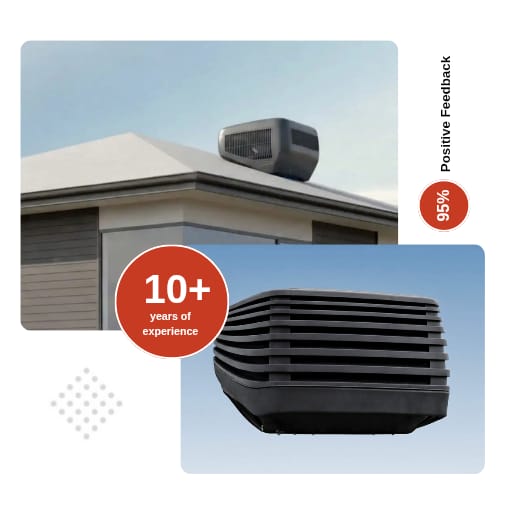
- Air Intake: The rooftop unit pulls in warm, dry outdoor air.
- Evaporation: A pump soaks cooling pads with water. The hot air passes through these wet pads, causing the water to evaporate, which naturally absorbs heat.
- Distribution: A fan then pushes the newly cooled, moist air through ducts and into your rooms.
- Air Exchange: Warm indoor air must exit through slightly open windows or doors, ensuring a constant flow of 100% fresh, cool air.
This system is highly energy-efficient because it uses only a fan and a pump. Unlike a split system air conditioner or multi-head split system, evaporative cooling does not rely on compressors or chemical refrigerants.
Benefits of Installing an Evaporative Cooling System
Evaporative cooling provides significant upsides, making it a compelling option for many homes, particularly in Australia’s drier regions:
Exceptional Energy Efficiency: These systems consume 50–80% less electricity than standard refrigerated air conditioning because they only run a fan and a pump, without a high-draw compressor.
Minimal Operating Expenses: Running costs are very low. Annual energy expenses are estimated at just $200–$300 (or potentially as little as $18–$42 for modern inverter models), plus a small water fee of $30–$50 per season.
Superior Air Quality: They continuously introduce 100% fresh, filtered outdoor air into the home. This action naturally flushes out stale air, reduces indoor allergens and eliminates odours, benefiting families.
Sustainable and Eco-Friendly: Evaporative coolers have a lower carbon footprint because they use no harmful chemical refrigerants. The integration of modern inverter technology further enhances their environmental performance and efficiency.
In essence, it is a sustainable cooling solution that significantly reduces utility bills without compromising comfort when used in the correct climate.
Drawbacks and Restrictions of Evaporative Cooling System
Evaporative cooling systems are not the perfect solution for all climates and situations. Here are their primary limitations:
Sensitivity to High Humidity: The performance of an Evaporative Cooling System can decrease significantly in high-humidity environments such as coastal regions or tropical areas. Since the air already contains high moisture levels, evaporation becomes less effective, limiting temperature reduction and sometimes creating a damp or muggy indoor feeling. Regular maintenance is essential for an Evaporative Cooling System, as poor cleaning can lead to moisture, mineral deposits, and bacteria buildup within the unit. This reduces cooling efficiency, affects airflow, and may cause unpleasant odours or hygiene concerns, making routine servicing vital for optimal performance and healthy indoor air quality.
Seasonal Operation: The Evaporative Cooling units are designed to provide cooling only during the summer months. They offer limited or no heating capacity (though some may include a basic ventilation mode). A split system air conditioner or a multi-head split system is often the preferred choice for homes that require winter heating or precise control over individual rooms.
- Requirement for Exhaust Airflow: For the system to function efficiently, windows or doors must be left slightly open to allow warm air to exit. This necessary ventilation can introduce outdoor noise or dust, and may raise minor security concerns unless appropriate insect or security screens are installed.
Furthermore, water consumption (typically 10–20 litres per hour) is a factor to consider in regions experiencing long, dry seasons, although newer, efficient models are designed to minimise this usage.
Evaporative Cooling vs Air Conditioning: A Side-by-Side Comparison
When weighing evaporative cooling system vs air conditioning (refrigerated/reverse-cycle), the differences are stark. Here’s an updated comparison based on recent Australian data:
Aspect | Evaporative Cooling System | Refrigerated Air Conditioning (Reverse-Cycle) |
Cooling Method | Water evaporation | Refrigerant compression |
Energy Use | Very low (fan + pump) | Higher (compressor-driven) |
Annual Running Costs | $200–$300 (inverter models as low as $18–$42) | $400–$500+ |
Air Quality | 100% fresh outdoor air, filtered | Recirculates indoor air |
Humidity Impact | Adds slight moisture | Dehumidifies (dries air) |
Best For | Hot, dry climates (e.g., inland VIC, SA, WA) | Humid or variable climates anywhere |
Installation Cost | $2,800–$6,000 (ducted systems) | Higher (often $6,000+) |
Maintenance | Pad cleaning, Pad cleaning, water flushing and routine cleaning an evaporative cooling system | Filters, refrigerant checks |
Environmental Impact | Lower emissions, no chemicals | Uses refrigerants, higher energy use |
Evaporative cooling system wins on cost and freshness in dry areas; refrigerated offers year-round versatility and precise control.
Optimal Locations for Evaporative Cooling in Australia
Evaporative cooling is most effective in Australia’s hot and dry climates, specifically, regions like Adelaide, Perth, and inland areas of New South Wales, Victoria, South Australia, and Western Australia. Its success in these locations is due to the low humidity, which allows for the greatest possible reduction in air temperature.
This technology is ideally suited for single-storey or open-plan homes that provide easy roof access for unit installation and favourable conditions for ducting. While larger properties prioritise systems to minimise areas, the system’s efficiency is unmatched in arid summer conditions. For areas with slightly higher humidity, a hybrid or supplementary cooling solution might be necessary.
Is an Evaporative Cooling System Right for Your Home?
To determine if this is the right choice for your home, consider these points:
- Does your region consistently experience hot, dry summers with low humidity?
- Is your house suitable for a ducted installation (such as a single-story home with accessible roof space)?
- Are you prioritising fresh air and minimising utility bills over dehumidification and winter heating?
A quality ducted system typically costs between $2,800 and $6,000 to install. The most reliable next step is to arrange a professional site assessment. A licensed HVAC analyst can analyse your property, confirm compatibility, and provide an accurate estimate of savings and final costs.
Ready to Buy an Air Conditioner in Melbourne?
Stay cool throughout the year with high-performance air conditioners from SmartElectric. We stock reliable, energy-efficient units perfect for Melbourne homes. Visit us at 101 Collins St, Melbourne VIC 3000, to find the Aircon that suits your space, lifestyle, and budget.
Grab Best Aircon Deals Today
Smart Work, Customer Satisfaction. Guaranteed.
Frequently Asked Questions
How does evaporative cooling compare to traditional air conditioning?
An air conditioner (refrigerated AC) uses chemical refrigerants and a compressor to actively remove heat and humidity from the air, which it then recirculates in a sealed space. It works effectively in all climates, including humid ones, but costs more to run and consumes more energy.
An evaporative cooler (or swamp cooler) cools air naturally by drawing hot, dry outdoor air through water-soaked pads. The process adds a small amount of moisture and continuously flushes the home with 100% fresh, filtered air. It is significantly more energy-efficient and cheaper to operate but only performs well in hot, dry climates where the humidity is low.
How effective are evaporative coolers in cooling a space?
Evaporative coolers effectively drop the air temperature by 5–15°C (up to 30°F) by using water evaporation to absorb heat. This process works best in low-humidity conditions, providing a fresh, cool and breezy atmosphere. However, their efficiency significantly decreases when humidity levels climb above 50–70%.
When is evaporative cooling least effective?
Evaporative cooling is least effective in high-humidity climates (e.g., coastal or tropical areas) where evaporation is limited, making it ineffective and potentially muggy. It’s also unsuitable during humid monsoon seasons, very hot/humid spells over 37°C with rising moisture, or if you need precise dehumidification or sealed cooling.
Do windows or doors need to be open for an evaporative cooler to operate correctly?
Yes, for most systems, especially portable or ducted ones, you need at least one window or door slightly open (or multiple for cross-flow) to exhaust warm, humid air and maintain fresh airflow. Without it, humidity builds up, reducing efficiency. Roof-mounted whole-home units may rely on ducted exhaust instead.
Will using ice in an evaporative cooler make it more efficient?
No, adding ice usually doesn’t help and can hinder performance. Ice cools the water but slows evaporation (which needs warmer water to work efficiently), delaying cool air output. It may overwork the unit or reduce overall effectiveness. Stick to regular water for best results.
How often does an evaporative cooler need to drain its water?
Most systems “dump” or drain off water every 6–8 hours of continuous use (or at least once daily in hot weather) to flush minerals, prevent buildup and refresh the reservoir. Modern units with purge/pump cycles may do this automatically after a set volume or time, check your model for specifics.