How does Evaporative Cooling work?
Curious about how Evaporative Cooling work? The process is simple, energy-efficient, and inspired by nature’s own cooling method. Understanding how Evaporative Cooling work helps homeowners appreciate why this system is ideal for hot and dry climates.
How Evaporative Cooling Work – Step by Step
1. Air Intake — The rooftop unit pulls in warm, dry outside air through intake vents.
2. Water Distribution — A pump circulates water over special cooling pads (evaporative media), saturating them evenly.
3. Evaporation Magic — Hot air passes through the wet pads, causing water to evaporate and absorb heat, cooling the air while adding a small amount of moisture.
4. Fan Distribution — A quiet, powerful fan pushes the cooler air through insulated ducts to ceiling vents in your rooms.
5. Air Exchange — To keep the system efficient, warm indoor air exits via slightly open windows or doors, ensuring continuous fresh air flow.
No refrigerants or compressors are involved, which keeps energy use low and maintenance simple.
Key Components That Help Evaporative Cooling Work Efficiently
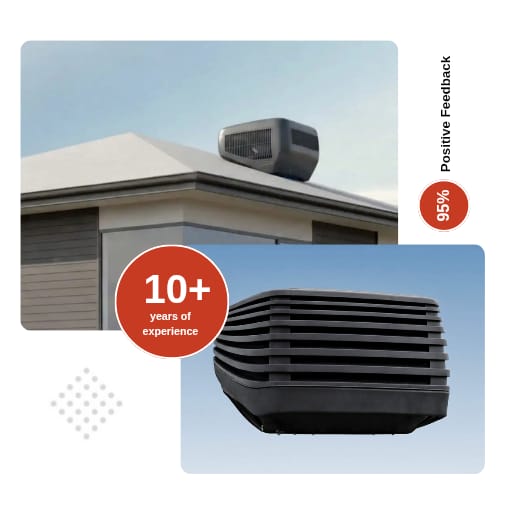
- The Main Unit: This weather-resistant casing, typically roof-mounted, contains the primary working parts: the fan, pump, cooling pads, and all system controls.
- Water Pump: Responsible for cycling water from a reservoir or direct supply to continuously soak the cooling pads, ensuring maximum efficiency without unnecessary water usage.
- Cooling Pads (Evaporative Media): Constructed from highly absorbent materials like cellulose or aspen, these pads create a large surface area for the most effective heat-absorbing water evaporation.
- Fan: Often a quiet, energy-efficient, variable-speed or inverter-controlled model, it is what pushes the cooled air strongly and efficiently throughout the duct system.
- Ductwork: These insulated channels distribute the conditioned air across various rooms, often featuring zoning capabilities for specific temperature control.
Routine servicing, including pad cleaning and system flushing, ensures Evaporative Cooling work at peak efficiency and extends equipment lifespan.
Where Evaporative Cooling Works Best and Where It Doesn’t?
Evaporative cooling performs best in hot, dry climates with low relative humidity, typically below 50–60%. Under these conditions, rapid evaporation enables maximum temperature reduction and efficient natural cooling. However, evaporative cooling is less suitable for humid, coastal, or tropical regions where moisture levels in the air limit evaporation, reducing cooling performance and sometimes creating a muggy indoor environment.
Why Consider Evaporative Cooling?
An Evaporative Cooling System offers several practical advantages for Australian homes:
Exceptional Energy Efficiency: Uses significantly less electricity as it operates without a compressor.
Lower Running Costs: Simple operation helps reduce overall energy bills.
Environmentally Friendly Cooling: No harmful chemical refrigerants are required.
Fresh Air Circulation: Continuously introduces clean, filtered outdoor air into indoor spaces.
In regions such as Victoria, upgrading to an energy-efficient evaporative cooling solution may align with initiatives like the Victorian Energy Upgrades (VEU) program, which encourages households to adopt energy-saving technologies and improve overall efficiency.
For residents in dry climates seeking a smart, natural, and cost-effective cooling solution, understanding how evaporative cooling works highlights its clear advantages over conventional air conditioning systems.
Thinking About Installing Evaporative Cooling?
Enjoy fresh, whole-home comfort while keeping energy costs down. SmartElectric’s high-efficiency systems are ideal for Melbourne summers. Visit us at 101 Collins St, Melbourne VIC 3000 or call (03) 9112551 today before peak season demand rises.
Grab Best Aircon Deals Today
Smart Work, Customer Satisfaction. Guaranteed.
Frequently Asked Questions
What are the disadvantages of evaporative cooling?
A significant drawback is the poor performance of evaporative cooling in high-humidity environments. When the relative humidity surpasses 50–60%, the evaporation process slows considerably, leading to reduced cooling efficiency and an unpleasant, muggy air quality. Additionally, this cooling method introduces moisture to the indoor air, which can feel uncomfortable in already humid areas and may encourage mould growth if ventilation is inadequate.
An evaporative cooler (or swamp cooler) cools air naturally by drawing hot, dry outdoor air through water-soaked pads. The process adds a small amount of moisture and continuously flushes the home with 100% fresh, filtered air. It is significantly more energy-efficient and cheaper to operate but only performs well in hot, dry climates where the humidity is low.
Is evaporative cooling more cost-effective to operate than a split system?
Evaporative cooling is significantly more cost-effective to run than a split-system (refrigerated) air conditioner. It uses 50–80% less electricity—often just powering a fan and small pump—resulting in annual running costs of $200–$400 in typical Australian homes, compared to $500–$1,000+ for split systems, especially during peak summer use.
How long is it safe to operate an evaporative cooler during the night?
Evaporative cooling systems can be safely operated overnight for extended periods (8–12 hours or more), provided there is proper ventilation. To maintain efficient and quiet operation, especially with modern units featuring timers, thermostats, or inverter fans, ensure windows are kept open for proper airflow and exhaust. Also, remember to check that the water reservoir is full and the cooling pads are clean to prevent performance issues or unpleasant odours.
Is evaporative cooling an energy-intensive option?
Evaporative cooling is a highly energy-efficient alternative to traditional air conditioning, using significantly less electricity. Its operation, which only requires power for a fan and a water pump, typically draws just 200–800 watts—comparable to running a few light bulbs or a standard fan. Since it avoids the use of an energy-hungry compressor, evaporative cooling is one of the most cost-effective whole-home cooling solutions, often running for mere cents per hour.
Is evaporative cooling effective when the weather is hot?
Yes, evaporative cooling works very well on hot days, especially when the air is dry. On days above 35–40°C with low humidity, it can drop indoor temperatures by 10–15°C or more, providing strong, effective cooling. Performance is best in arid conditions; it becomes less effective only when humidity rises significantly.